
Why Trees Fall in Gold Coast Storms (And How to Know if Yours Is at Risk)
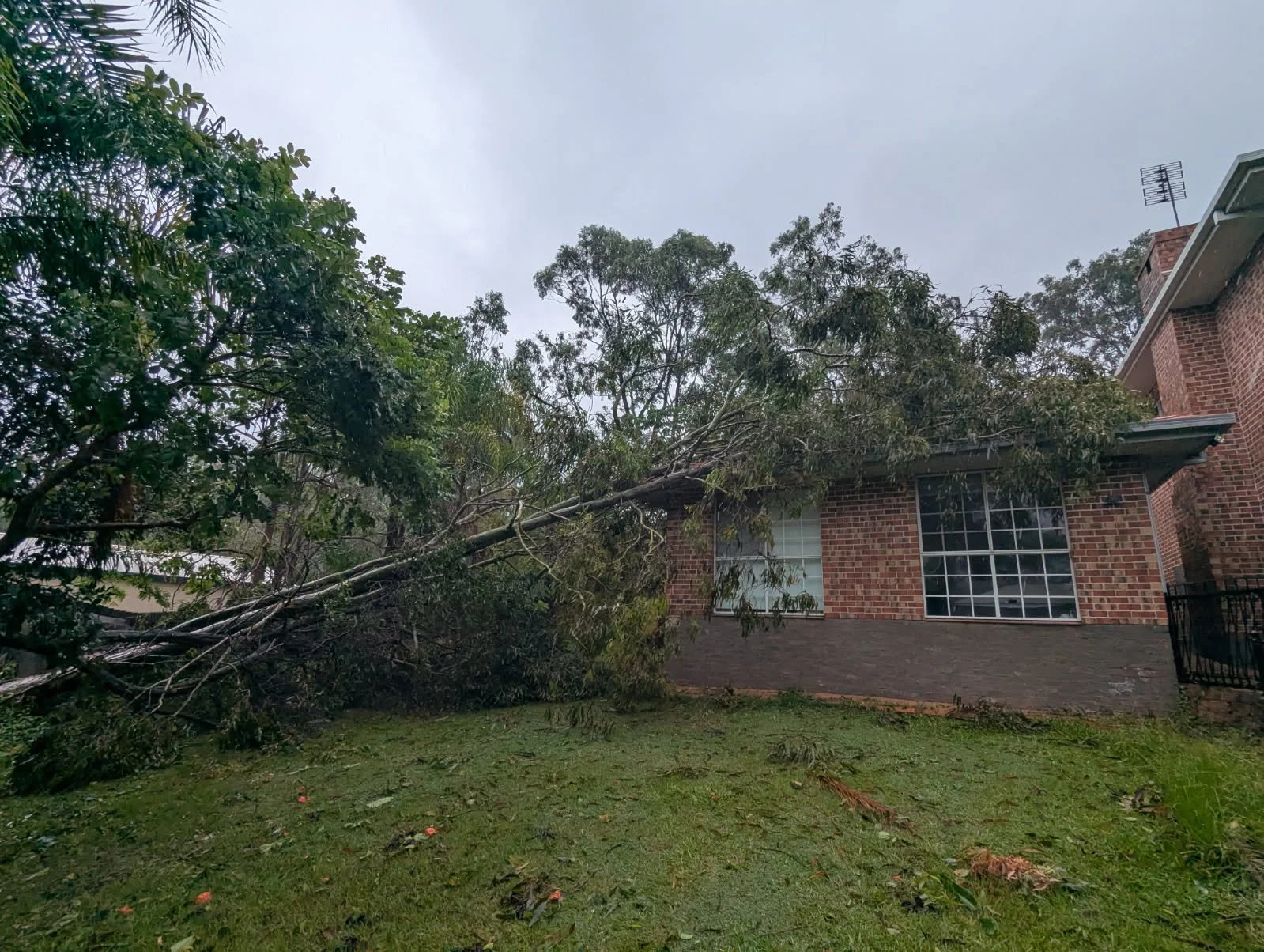
Every Gold Coast storm season, we see trees and large branches come down across backyards, driveways, fences and homes.
Sometimes the damage seems to come completely out of the blue. A tree can look healthy from the ground and still have problems that aren't immediately obvious.
And while strong wind can bring down even a healthy tree, there are a number of things that can make a tree more vulnerable when a big storm rolls through.
It Starts Below Ground
When we're looking at why a tree has fallen, what's happening underground can be just as important as what you can see above it.
Soil conditions vary considerably across the Gold Coast, and some coastal areas have sandy soils that don't provide the same support as heavier soils.
After prolonged rain, saturated ground can also affect how well a tree's root system is supported. Add strong winds and a large, heavy canopy into the mix and there's a lot more pressure being placed on the tree.
The Problem You Can't Always See: Internal Decay
One of the tricky things about assessing a tree yourself is that problems aren't always obvious from the outside.
A tree may still have plenty of leaves and look reasonably healthy while decay is developing inside the trunk or major branches.
There can sometimes be clues, fungal growth around the base, cavities, damaged areas of trunk or changes in the canopy, but that's not always the case.
It's often only after a tree or large branch comes down that the extent of the decay becomes obvious.
An Uneven or Overgrown Canopy
A large, dense or poorly balanced canopy can also put additional stress on a tree during high winds.
Branches may have become excessively long or heavy, or years of uneven growth may have left much more weight on one side of the tree.
That doesn't automatically make a tree dangerous. But when strong winds hit, the size, shape and weight of the canopy can put extra pressure on the trunk, branches and roots.
Good pruning is about much more than making a tree look neat. When appropriate, it can help remove problematic branches and improve the overall structure of the tree.
What About Different Tree Species?
We work on a huge variety of trees across the Gold Coast, and each species grows and responds to its environment differently.
There are, however, a few that Gold Coast homeowners regularly ask us about.
Cocos Palms
Cocos Palms (Syagrus romanzoffiana) are common throughout the Gold Coast and can become very tall.
Their height, large fronds and exposure to wind mean they're worth keeping an eye on, particularly when they're growing close to houses, pools, driveways or other areas where falling material could cause damage.
Camphor Laurels
Camphor Laurels can grow into very large trees with broad, spreading canopies.
With trees of this size, it's important to consider not only the canopy but also what's happened around the tree over the years. Construction, excavation, paving and damage to roots can all affect a mature tree.
Large Gum Trees
Large eucalypts are another common concern, particularly when major branches extend over houses, driveways or outdoor living areas.
They can drop large branches for a number of reasons, so if you've noticed dead branches, cracks, old damage or anything else that doesn't look quite right, it's worth getting the tree checked.
What to Do Before Storm Season
If you want a practical guide to checking the trees on your property, we've put together a separate post covering the main warning signs Gold Coast homeowners should look out for. It covers things like dead branches, cracks in the trunk, root problems and what to watch for with palms specifically.
The short version is this: if a tree is showing signs that something isn't quite right, it's worth getting it assessed before storm season. It's a lot cheaper and far less stressful than dealing with a fallen tree or major damage afterwards.
What to Do if You're Not Sure
If you've got a tree on your property and you're not sure whether it's safe, the best thing to do is have a qualified arborist take a look.
A tree risk assessment looks at the condition of the tree, any problems that may be present and what's around it if something were to come down.
And having a tree assessed doesn't automatically mean it needs to be removed.
It might be perfectly fine and need nothing done. It might need some pruning or ongoing monitoring. Or, in some cases, removal may be the safest option.
The Good Wood Co. provides tree risk assessments, storm damage response and tree removal services across the Gold Coast.
If there's a tree on your property you're concerned about heading into storm season, give the team a call and we'll take a look.